I Need a Spell Caster to Fix My Broken Marriage Back Again 2019
Introduction
The spread of the pandemic COVID-nineteen in Italy from February 2020 and the subsequent health emergency led to several restrictive measures. Schools and universities accept been closed at the cease of Feb, and starting from March 9th, 2020, a quarantine measure became necessary leading to a full general closure of almost all public businesses and work activities.
Children and families have been deprived of their educational, work, and sport activities, but as well from all their friendship and relational contacts. Suddenly parents had to manage their children at home from school 24 h a day and, at the same time, most of them had to outset smart-working from abode, still carrying out their children'due south schoolhouse commitments. Many parents also had to manage difficulties and hurting related to having ill or dead relatives, having had wages reductions, or in some cases, having lost their work. It is easy to empathize how Italian families accept been exposed to a very strong emotional and psychological stress.
This situation had relevant repercussions on daily life of families, especially of children that have been deprived of their socialization and play spaces. The parents suddenly became the only point of reference for their children since the other references and educational figures were no longer bachelor.
As enlightened by the World Wellness Organization (WHO, 2020a,b), this situation could have long-term negative consequences on psychological well-being and in that location is a need to invest in mental health services and other services. A recent review stressed how people all over the world can show many different psychological disorder symptoms related to the pandemic (Shahyad and Mohammadi, 2020). The WHO (2020a) highlighted that children were also showing signs of mental illness. In fact, both international and domestic studies showed that, during the lockdown, children exhibited several problems, such equally anxiety and emotional and behavioral disorders (Jiao et al., 2020; Spinelli et al., 2020; Xie et al., 2020).
The European Pediatric Association–Union of National European Pediatric Societies and Associations (EPAUNEPSA; Jiao et al., 2020) has stressed the importance to address children's psychological needs during the pandemic due to the negative repercussions on their psychological well-being, highlighting the relevant protective part of parents in decreasing their fear and stress. Enquiry on psychological consequences of traumatic events, such as the terroristic assail of September xi, 2001, showed how children can besides experience long-term furnishings on psychological well-being, reporting mental disorders subsequently six months (Hoven et al., 2005).
All these information highlight the importance of not underestimating the psychological risks that children and their families could face. In a report on May 13th, 2020, the United nations likewise underlined how, during the COVID-xix pandemic, the emotional problems of children and adolescents were exacerbated by family unit stress, social isolation, interruption of school and educational activity, and dubiousness for the future which occurred in critical moments of their emotional development (Un, 2020). Understanding how to strengthen parents and families in this situation, with the aim to protect children, represents an of import goal that researchers should have in this period because it is possible that other future pandemics will affect humanity (Cluver et al., 2020).
The express research conducted to date on the effects of the COVID-19 pandemic on well-being of parents and their children both in Mainland china and in Italy showed that COVID-19 related risks, such as (a) living in a cerise zone (i.due east., a loftier-risk zone like Lombardia and Veneto for Italy), (b) being a parent positive to SARS-COV-2, (c) having relatives or friends positive to the SARS-COV-2 or who died from the SARS-COV-2, and (d) living in a loftier-take chances environment (i.e., non having an open space in the home during the lockdown, losing a job during the pandemic, having a depression income, non having net connection), did non accept potent negative direct effects on families' well-beingness (Spinelli et al., 2020) or on children'due south symptoms and problematic behaviors per se (Jiao et al., 2020). Actually, the inquiry conducted by Spinelli et al. (2020) in Italy showed that it was the parenting stress related to the wellness emergency, the pandemic, and the lockdown that increased children's psychological, emotional, and behavioral problems. In line with these findings, Wang et al. (2020) suggested the need to deeply understand the family operation and processes that can promote children'south psychological well-being during the pandemic.
For this reason, this study focused on identifying which parental psychological variables tin can mediate the relationship between parents' psychological distress during the pandemic and the lockdown and their children's emotional regulation, in order to understand which possible intervention should be implemented to ameliorate families' well-being. Ii recent meta-analyses highlighted the relevant function that the parent–child relationship tin have in promoting children's effortful cocky-regulation (Pallini et al., 2018) and in decreasing children's behavioral problems, specifically attention problems (Pallini et al., 2019).
The stress of quarantine tin bear on psychological well-being of adults, every bit confirmed in a recent review (Brooks et al., 2020), and might also have long-term effects (Liu et al., 2012). A study conducted on parents and children quarantined in 2009 during the H1N1 flu showed that the high-stressful isolation increased parents' psychological distress that in turn had an impact on their children's well-existence (Sprang and Silman, 2013). Children who have parents with loftier levels of stress showed more externalizing problems and developed less emotion regulation (Deater-Deckard and Panneton, 2017).
As reported past Leary and Hoyle (2009), psychological distress upsets the power to self-regulate (Tillema et al., 2001; Scott and Cervone, 2002) only regulatory emotional self-efficacy is crucial in the self-regulation of relationships and behavior (Bandura et al., 2003). According to Bandura (1997), psychological distress, such as lack of social back up or parental depression, tin affect parenting self-efficacy, which is the belief that parents have to be able to manage their parental tasks successfully and that it is, in turn, related to children's adjustment (Jones and Prinz, 2005).
Some previous studies showed that the relationship between parental mental wellness and children'due south emotional and behavioral well-being is mediated past positive parenting strategies (Giallo et al., 2014). According to Eisenèberg et al. (2005), parents' positivity and warmth can promote effortful command in children, reducing their externalizing behaviors. Likewise, cocky-efficacy, specifically parenting self-efficacy, can role equally a mediator between ecology variables or psychological weather condition related to an external situation (east.g., the stress related to the pandemic) and parenting competence. In fact, ecology aspects might also indirectly bear upon parents' belief to be competent in managing parental tasks, and this could lead to less psychological well-being of the children (Jones and Prinz, 2005). For this reason, it is important that parents accept a good parenting self-efficacy in order to display positive parenting strategies that can foster adaptive functioning and emotion regulation in children (Stack et al., 2010).
Aims and Hypotheses
Inside the theoretical framework of Social Cerebral Theory (Bandura, 1997), the nowadays report aimed to investigate a path model in which parenting self-efficacy and parents' regulatory emotional self-efficacy (related to COVID-19 lockdown) mediated the relationship between parents' psychological distress and both children's emotional regulation, and children'southward lability/negativity, in line with a previous report that stressed how parenting self-efficacy can mediate the relationship between parents' psychological distress and children'south aligning (Giallo et al., 2014). Additionally, in our model parents' psychological distress was also predicted by existence exposed to several risks related to COVID-19 quarantine and the pandemic.
Moreover, the second aim was to appraise whether children's biological sex, children's age, and geographical surface area (Northern Italy, which is the most at-risk area for the spread of the pandemic and for the risk of contamination, vs. the rest of Italy) moderated the structural paths of the model. There is prove that children's biological sex can affect parents' way to respond to children (Sanders and Morawska, 2018) and that parenting self-efficacy tin can alter over time (Deater-Deckard and Panneton, 2017), growing during early childhood (Weaver et al., 2008), and decreasing when children become adolescents (Glatz and Buchanan, 2015). Conversely, we did not wait to observe whatsoever differences regarding living (or not living) in a high at-risk zone for the COVID-19 (i.e., Northern Italy), as found past recent Italian and Chinese studies (Jiao et al., 2020; Spinelli et al., 2020).
Materials and Methods
Participants
The present written report was conducted in Italy, via an online survey, during April 2020 when in that location was a lockdown related to the health emergency due to the COVID-19 pandemic. Specifically, Italian parents with a child aged between vi and 13 years were recruited through a snowball sampling procedure to complete the online survey. At the time of data collection, Italian republic had been in quarantine for more than 1 month. A link to the survey was shared among parents using unlike social networks (east.g., Facebook, WhatsApp), besides asking parents to share the link amongst their contacts. Overall, 417 parents take had access to the survey, and a total of 277 valid questionnaires were used in the nowadays investigation, yielding a response rate of 66.iv%. Parents' historic period ranged from 30 to 58 years old (Yard age = 43.36, SD age = iv.76) and the recruited sample mostly consisted of mothers (n = 248; 89.five%). As abovementioned, children were anile between half-dozen and 13 years (K historic period = 9.66, SD age = 2.29) and were most equally distributed for biological sexual practice (48% were boys and 52% were girls). Parents' socioeconomic status (SES) was predominantly medium-high (92.1%; n = 255). 14.i% (n = 39) lived lone at home with children during the quarantine. 62% (north = 171) of parents were from northern Italy, the Italian surface area about affected by the pandemic, and 37.9% (north = 105) were from Central and Southern Italy which were areas less affected by the pandemic (although they were also put in lockdown). Regarding their work situation, 195 parents (70.4%) continued to work and earn as earlier the quarantine, while 82 parents (29.half dozen%) lost their works or have had wage reductions or layoffs. seven.9% (northward = 22) were health workers and v.8% (n = 16) were health workers in a infirmary department that treated SARS-COV-2-positive patients. 91.7% of parents (north = 254) did not have whatsoever relative tested positive for the SARS-COV-2, and 8.3% (n = 23) had at least one relative that tested positive for the SARS-COV-2. 96.8% (n = 268) have not-hospitalized relatives due to SARS-COV-two, and 3.2% (n = 9) accept at least one hospitalized relative. Finally, 32.five% of parents (due north = 90) did not have any acquaintance or a loved 1 that tested positive to SARS-COV-2, and 67.5% (due north = 187) had at least one acquaintance or a loved 1 that tested positive for SARS-COV-2. Each parent gave his/her consent by clicking "Yes, I accept to participate in the report" on the first folio of the survey. This study was approved by the Ethics Committee of Sapienza Academy of Rome, Department of Developmental and Social Psychology, protocol number: 427, April 16, 2020.
Two power analyses were conducted to determine the recommended minimum sample size: (1) for detecting a significant bivariate effect and (ii) for conducting a structural equation model (SEM; Cohen, 1988). A moderate effect size of 0.25 was anticipated with a power level fix at 0.fourscore and a pregnant alpha level gear up at 0.05. The minimum sample size necessary to detect a significant bivariate effect was Due north = 124. Regarding the SEM, with five latent and fifteen observed variables, using the software developed by Soper (2020), results indicated that the required minimum sample size to run a SEM and detect a pregnant effect was North = 229.
Measures
COVID Risk Index
Using a similar procedure as used by Spinelli et al. (2020), nosotros created an ad hoc alphabetize that assessed risks related to the COVID-19 pandemic. Specifically, a composite alphabetize was created given one point for each of the following risk factors, if present: (a) relatives that tested positive for SARS-COV-2, (b) friends or acquaintances that tested positive for SARS-COV-2, (c) hospitalized relatives due to SARS-COV-2, (d) living in northern Italian republic, which was the well-nigh at-gamble area for the spread of the pandemic and for the gamble of contagion, (e) being a health worker, and (f) being a health worker in hospital departments that treated SARS-COV-2 positive patients.
Family Take chances Index
Over again, using a like procedure as used by Spinelli et al. (2020), we created an ad hoc index that assessed risks related to family state of affairs during the quarantine and the pandemic. Specifically, a composite index was created given one point for each of the post-obit risk factors if present: (a) a lower SES, (b) a worsened working situation during the quarantine, and (c) being a single or divorced parent who had to manage her/his own children at home alone during the quarantine. Both the family risk index and the COVID hazard index are intended as summative rating scales that were created ad hoc for this research.
Parents' Psychological Distress
Parents' psychological distress during the lockdown was evaluated using the Perceived Stress Scale (Cohen et al., 1983; Italian validation by Mondo et al., 2019). Parents were asked to think nigh the last month. The scale is composed of 10 items that parents rated on 5 signal-Likert scales from 1 (never) to 5 (very often). An example item is "During final calendar month how do you lot usually experience nervous and stressed?" The scale showed a good reliability and validity also in the Italian validation (Mondo et al., 2019). In the present sample, the measure showed a good reliability, Cronbach'south alpha of 0.84.
Parents' Regulatory Emotional Self-Efficacy
The Regulatory Emotional Cocky-Efficacy Calibration (Caprara et al., 2013b) is a 13-item scale that evaluates the belief of parents to be able to manage with their negative emotions (i.due east., anger, sadness, fear, and guilt) during the COVID-19 lockdown on a v point-Likert scale from 1 (Not able) to five (Able). The scale was modified request parents to think well-nigh the quarantine period related to COVID-xix wellness emergency, and the following item was added to the scale "How do you feel able to manage the anxiety caused by hearing the news well-nigh coronavirus that is given on TV or that you read on the internet?" The scale showed good validity and reliability (Caprara et al., 2013a,b). In the present sample, the scale showed a skillful reliability: Cronbach'due south blastoff of 0.87.
Parenting Self-Efficacy
Parents completed the Parenting Cocky-Agency Measures (Dumka et al., 1996; Baiocco et al., 2017) which is an 8-item scale that evaluates the belief of parents to exist able to manage with daily parental demands (i.e., feeling to exist a good parent, working to face and solve difficulties with their children) during the month of lockdown on 7-point Likert scales from i (seldom) to seven (ever). The scale was modified, asking parents to remember about the quarantine flow related to COVID-19 health emergency, and three items were added to the original scale. These three items asked parents how they experience able to reassure their children nearly the health emergency, to organize their children's daily life during the quarantine, and to explain to their children what is happening. The scale showed good validity and reliability (Baiocco et al., 2017, 2018). In the present sample, the scale showed a adept reliability: Cronbach'southward alpha of 0.87.
Children'south Emotion Regulation
Parents were asked to think near their child during the quarantine and to consummate a brusk version of the Emotion Regulation Checklist (Molina et al., 2014). This is a 10-detail scale that evaluates two sub-dimensions, namely, emotional regulation (i.e., positive emotions, existence able to give voice to his/her negative emotions) and lability/negativity (i.due east., acrimony, disruptive behaviors, excessive exuberance) of children during the COVID-xix lockdown on a 4 indicate-Likert calibration from i (Almost never) to 4 (Almost always). The scale showed adept validity and reliability (Molina et al., 2014; Di Maggio et al., 2016). In the present sample, both emotional regulation and lability/negativity scores showed acceptable reliability, respectively Cronbach's alpha of 0.65 and 0.78.
Data Analysis
Firstly, bivariate correlations amongst variables were calculated along with descriptives. After, a mediation analysis with latent variables was performed via SEM, employing a parceling strategy (e.g., Bagozzi and Heatherton, 1994; Piffling et al., 2002). A parcel represents an aggregate of dissimilar items measuring a specific construct (Niggling et al., 2002; Coffman and MacCallum, 2005). Two or 3 parcels were constructed for each of the latent variables using the "item-to-construct" remainder approach (Piffling et al., 2002), which means edifice each package by examining the item–construct relationships as represented by factor loadings in the item-level factor analyses (for a detailed description of this procedure, meet Little et al., 2002). In such a way, parcels typically independent a counterbalanced number of items and had comparable reliabilities. Therefore, our model comprised three latent variables with 3 parcels each and two latent variables with 2 parcels each. Summative indexes (such as the CRI and FRI) were treated as manifest variables.
Model fit was evaluated with the following indices: (a) the Comparative Fit Index (CFI); (b) the Tucker–Lewis index (TLI); (c) the root mean squared fault of approximation (RMSEA); (d) and the standardized root hateful square residuum (SRMR). In general, for TLI and CFI, values betwixt 0.90 and 0.95 are considered acceptable (eastward.thou., Bollen, 1989; Byrne, 1994; Marsh et al., 2004) and values above 0.95 are deemed to be very skilful (Hu and Bentler, 1999). On the other hand, RMSEA and SRMR values smaller than (or equal to) 0.08 indicate a good fit (e.g., Bollen, 1989; Browne and Cudeck, 1993; Hu and Bentler, 1999; Marsh et al., 2004).
In order to evaluate the statistical significance of indirect effects, which represented the "mediated" effects, the bootstrapping procedure was used employing 5000 samples with replacement from the full sample to construct bias-corrected 95 percent confidence intervals (CI) (Preacher and Hayes, 2008; Hayes, 2009). Mediation typically occurs if the indirect effect is significant, that is, the cypher value is not included in the CI (Preacher and Hayes, 2008; Hayes, 2009).
Finally, to examination possible moderation effects of children'due south biological sexual practice and age, and living in a geographical expanse with loftier COVID-nineteen risk, a multigroup approach inside SEM was employed as suggested by Baron and Kenny (1986). In this process, the invariance of the structural parameters of the proposed model was tested separately for (a) boys and girls; (b) different levels of children's age; (c) geographical residential area, that is, living (vs. not living) in Northern Italy. A detailed description of the process will be given in the "Results" section (come across likewise Sauer and Dick, 1993; Cattelino et al., 2019). All analyses were run with statistical software SPSS 25 and MPLUS eight.3.
Results
Correlations Among Variables
The family chance index was positively related with parents' psychological distress and positively with lability/negativity. Parents' psychological distress was negatively related with parenting self-efficacy, parents' regulatory emotion cocky-efficacy, and children'due south emotion regulation and was positively related with children's lability/negativity. Parenting cocky-efficacy was positively related with parents' regulatory emotion self-efficacy, and children'south emotion regulation, and was negatively related with children's lability/negativity. Parents' regulatory emotion self-efficacy was positively related with children's emotion regulation and negatively related with children'due south lability/negativity. Finally, children's emotion regulation was negatively related with children's lability/negativity. Correlations, means, and standard deviations are reported in Tabular array 1.
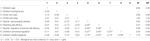
Table 1. Correlations amid variables.
Arbitration Model
A SEM was employed to test the hypothesized mediation model in which parenting cocky-efficacy and parents' regulatory emotional cocky-efficacy (related to the COVID-nineteen lockdown) mediated the relationship between parents' psychological distress and both children'south emotional regulation and children's lability/negativity. Moreover, parenting self-efficacy mediated the relationship between parents' regulatory emotional cocky-efficacy and both children'due south emotional regulation and children'southward lability/negativity.
In the present paper, the arbitration analysis strategy recommended by James et al. (2006) was followed. In the first step, the mediation model was tested (i.e., model without the directly effects, indicated with M med ). In the 2d step, a full model, including all the direct effects, was tested (indicated with M full ). The two nested models were compared via the chi-foursquare difference test, contrasting Chiliad med with Yard full (Δχ2, Satorra and Bentler, 2001). A non-significant Δχ2 would reveal that the full model does not significantly increase the fit and therefore the mediation model is to be preferred since it is more parsimonious.
The mediation model (M med ) showed an overall good fit, chi-square (83) = 140.40, p < 0.01, RMSEA = 0.05, CFI = 0.97, TLI = 0.96, SRMR = 0.04. The full model including direct effects (M total ) did not apparently improve the model fit, chi-square (79) = 134.52, p < 0.001, RMSEA = 0.05, CFI = 0.97, TLI = 0.96, SRMR = 0.04. In fact, the two models were assorted, and the chi-square divergence examination was not significant, Δχ2 (four) = 5.88, p = 0.20. Therefore, the mediation model (Yard med ) should exist preferred due to being more than parsimonious compared to the full model.
In Figure 1, all measurement and structural parameters of the mediated model (Thou med ) are reported.
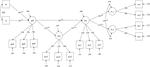
Effigy 1. Multivariate mediation model with structural equation modeling. Standardized coefficients are reported. Fri, family risk index; Cri, COVID risk alphabetize; ppd, parents′ psychological distress; pser, parents′ regulatory emotional self-efficacy; pse, parenting self-efficacy; er–c, emotional regulation of children; ln–c, lability/negativity of children. All measurement parameters were statistically significant for p < 0.01. Fit Indexes Chi-square (83) = 140.40, p < 0.01, RMSEA = 05, CFI = 0.97, TLI = 0.96, SRMR = 0.04. *p < 0.05; **p < 0.01.
Parents' psychological distress (ppd) was significantly, although modestly, affected by both COVID and family unit chance indexes. In turn, parents' psychological distress significantly and negatively affected both parents' regulatory emotional self-efficacy (pser) and parenting self-efficacy (pse). Parents' regulatory emotional self-efficacy significantly and positively afflicted parenting cocky-efficacy. Finally, parenting cocky-efficacy positively and significantly influenced children'due south emotional regulation (er_c) and negatively children's lability/negativity (ln_c). More importantly, parenting self-efficacy mediated the effect of parents' psychological distress and parents' regulatory emotional cocky-efficacy on both children'due south emotional regulation and children's lability/negativity. With the exception of those involving the COVID and family risk indexes, all other indirect effects were statistically pregnant, supporting the mediated model (see Table 2). In Table ii, a full decomposition of full and specific indirect of the mediated model (M med ) are reported. The COVID and family run a risk indexes displayed no significant furnishings on the other variables except for the same influence on parents' psychological distress.
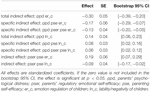
Table ii. Decomposition of indirect effects of the mediated model.
Moreover, referring to the total model (M full ), we also decomposed total, direct and indirect effects (meet Table 3) with the aim to report the ratio of indirect to the straight consequence and the proportion of mediated effect (MacKinnon et al., 1995).
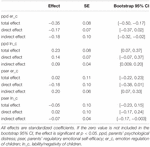
Table 3. Decomposition of full, directly, and indirect effects in the full model.
In regard to the relationship betwixt ppd and er_c, the ratio of indirect to the direct consequence was 1.06 (−0.eighteen/−0.17 = 1.06), while with respect to the relationship between ppd and ln_c the ratio was 0.64 (0.09/0.14 = 0.64). In regard to the human relationship between ppd and er_c, nearly the 51.42% of the effect was mediated (−0.18/−0.35 = 0.5142), while with respect to the relationship between ppd and ln_c virtually the 39.thirteen% of the effect was mediated (0.09/0.23 = 0.3913).
In regard to the relationship between pser and er_c, the ratio of indirect to the direct effect was −i.11 (0.20/−0.xviii = −ane.11), while with respect to the human relationship between pser and ln_c the ratio was −3.5 (−0.07/0.02 = −3.five). More than problematic was to approximate, in the same fashion, the amount of mediated effect regarding the human relationship betwixt pser with both er_c and ln_c since in those cases the indirect and the direct effects take opposite signs (every bit can be seen in Tabular array 3), and therefore, they tend to suppress each other, resulting in a reduced non-significant total upshot (pser er_c:0.02 = −0.18 + 0.twenty; pser ln_c: −0.05 = −0.07 + 0.02). With respect to non-significant total effect, scholars take pointed out that mediation can occur likewise in the absence of a detectable total effect if the indirect effect is meaning (e.g., MacKinnon, 2008; Hayes, 2009). This is apparently the case. In this perspective, although it cannot be absolutely claimed that furnishings were totally mediated and despite the presence of null total furnishings, it is worth to annotation that indirect furnishings were significant and that mediation has occurred.
Overall, nosotros can conclude that the hypothesized mediation model (M med ), reported in Effigy 1, is consistent with the data. Moreover, the mediation did not fit significantly worse than the full model (M full ) and therefore information technology was retained since it is more than parsimonious (James et al., 2006). Additionally, all indirect effects of the mediated model (M med ) were significant, indicating that mediation has occurred (e.g., Preacher and Hayes, 2008; Hayes, 2009).
Multigroup Analysis
Within SEM, the examination for a moderator effect tin can be performed using a multigroup analysis of the model in which the structural parameters are constrained equal beyond groups. Firstly, the structural parameters are freely estimated beyond groups to exam for the baseline model. Secondly, the structural parameters are constrained to exist equal across groups to test for the invariant model. In club to compare the fit of the two models, the chi-square difference test was used (Satorra and Bentler, 2001). A non-meaning chi-square indicates that the parameters cannot be ruled out to exist equal, and so the invariant model should be retained and no moderation occurs. Instead, if the chi-square divergence between the invariant and the baseline models is significant, which would mean that the invariant model fits significantly worse. Therefore, parameters are not equal across the groups and there is a moderation consequence. Results of chi-square difference tests of multigroup analyses with SEM are reported in Table 4.
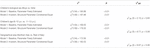
Tabular array 4. Multigroup analyses for children's biological sex and historic period.
Regarding children's biological sex, the fit of the baseline model was chi-square (134) = 185.88, p < 0.01, RMSEA = 0.05, CFI = 0.97, TLI = 0.97, SRMR = 0.07, whereas the fit of the invariant model was chi-square (139) = 187.98, p < 0.01, RMSEA = 0.05, CFI = 0.98, TLI = 0.97, SRMR = 0.08. The chi-foursquare divergence examination was not pregnant showing that the invariant model could not be rejected (Table 4). This finding suggests that biological sex of the children was not a moderator variable.
In regard to children's historic period (six–10 y.o. vs. xi–13 y.o.), the fit of the baseline model was chi-square (134) = 169.55, p < 0.01, RMSEA = 0.04, CFI = 0.98, TLI = 0.98, SRMR = 0.06; conversely, the fit of the invariant model was chi-square (139) = 179.32, p < 0.01, RMSEA = 0.05, CFI = 0.98, TLI = 0.98, SRMR = 0.07. The chi-foursquare deviation test was not meaning showing that the invariant model could non be rejected (Tabular array iv). Therefore, children's age did not appear to moderate the mediational effects tested in our model.
Finally, turning to geographical area (Northern Italy vs. rest of Italy), the fit of the baseline model was chi-square (134) = 172.56, p < 0.01, RMSEA = 0.05, CFI = 0.98, TLI = 0.98, SRMR = 0.06. Instead, the fit of the invariant model was chi-square (139) = 182.53, p < 0.01, RMSEA = 0.05, CFI = 0.98, TLI = 0.98, SRMR = 0.09. The chi-square difference test was not meaning, showing that the invariant model did not fit significantly worse and therefore could not exist rejected (Table iv). This event suggested that living in a high at-risk area for COVID-19, as information technology was Northern Italia at the time of information collection, did not significantly touch the structural parameter of our hypothesized model.
Word
The health emergency related to the COVID-19 pandemic and the consequent restrictive measures of quarantine have upset our lifestyles and our daily life. In detail, families with children had to confront an unprecedented and completely new situation in which parents suddenly remained the only reference signal for their children. Results of the present study, indeed, showed that the COVID risk index and the family chance index partially contributed to the psychological distress of parents, although their impact was modest in terms of accounted variance. Specifically, parents with college levels of psychological distress tendentially had a lower SES, had seen their working situation worsened during the quarantine, and were single or divorced parents who had to manage their children at home alone during the quarantine. Furthermore, regarding the COVID-19 take chances index, parents with more psychological distress more likely had relatives, friends, or acquaintances tested positive for the SARS-COV-2, had hospitalized relatives because of the SARS-COV-ii, lived in northern Italian republic which was the nigh at-risk surface area for the spread of the pandemic and for the risk of contagion, were health workers, and worked in infirmary departments that treated SARS-COV-2-positive patients.
However, our SEM showed that parents' psychological distress impacted on the emotional regulation and lability/negativity of their children passing through the mediators' outcome of parenting self-efficacy and parents' regulatory emotion self-efficacy. These findings suggested that what could accept a positive consequence on children'southward well-being and positive emotional regulation was non just being exposed to low level of parents' psychological stress, but it was the fact that parents felt able to manage and carry out their parental function and the related tasks. Our results suggest that self-confident parents can successfully actuate many personal resources that in plow seem to prevent their children'due south emotional dysregulation, fifty-fifty in emergency situations such as the pandemic that increased their levels of psychological distress.
Furthermore, 3 multigroup analyses were performed to test the possible moderation effects of children's biological sex and age and of geographical surface area (i.east., living or not living in Northern Italy, which is the most at-take chances expanse for the spread of the pandemic and for the risk of contamination). The multigroup analyses showed that the hypothesized model was robust and invariant across children's biological sexual activity, and age, and living (or not living) in Northern Italian republic. Thus, in line with Spinelli et al. (2020), parents' and children'due south psychological distress was not affected past living in the high at-take a chance zone for COVID-19 (vs. non living in the high at-adventure zone). We can speculate that, regardless of living in a more than risky area, relationships amidst variables remained stable because this unprecedented situation characterized by the isolation and quarantine measures was perceived in the same way throughout Italia. Alternatively, it is besides possible that our study did not have plenty power to detect differences in parameters between groups.
Parents should be supported to ameliorate their strengths and to feel able to manage their parental office and their emotions. During the quarantine, parents were the unique reference bespeak for their children aged between 6 and 13 years who rely much on their parents in this life stage. It is of import that parents know that they can protect their children, preventing their emotional dysregulation, using their strengths and cocky-conviction, even if they are experiencing fear and astringent stress for the health emergency. Moreover, even if parents are exposed to loftier levels of stress, they can still promote a positive emotional operation in their children if they feel able to reassure their children about the health emergency, to organize their children'due south daily life during the quarantine, and to explicate them what is happening.
Despite these important findings, this study had some limitations. We nerveless a convenience sample that was non representative of the Italian population. Moreover, emotion regulation and lability/negativity of children were reported by parents and this could be less informative. However, many other scholars have used this type of data drove which is very mutual in this kind of studies (e.g., Trumello et al., 2018; Spinelli et al., 2020). Moreover, our data are correlational and it is likewise believable that parental distress and self-efficacy could be affected by children's lack of emotion regulation and lability/negativity. Furthermore, nosotros assessed the parent'southward own judgment of their children's well-being and it is possible that parents who feel (according to themselves) a lot of distress too tend to judge their children's well-being more negatively irrespective of the children'south actual well-being. Finally, it is not possible to infer causal relationships amongst variables because of the correlational nature of information. Future longitudinal study can be conducted in social club to securely exam the possible long-term furnishings of parents' psychological distress related to the health emergency on their children'due south psychological well-being and the possible contrary causation effect.
Notwithstanding, despite these limitations, the present study presents many implications for prevention and intervention programs. In order to prevent children's distress, intervention programs should start from family unit and parents. This programs should exist aimed at increasing parents' regulatory emotional self-efficacy and parenting cocky-efficacy, past activating their adaptive strategies and resource to deal with daily tasks and reinforcing their strengths. These parents' skills could exist taught and learned, representing an of import resources fifty-fifty in emergency situations such as a pandemic, in which parents remain the simply points of reference and didactics for their children. These prevention programs should be primarily addressed at (but not express to) parents who are health workers, who lived alone with children during the quarantine, who take sick relatives, and who have a low SES and a worsened piece of work state of affairs, in order to prevent the impact of their psychological distress on their children, reinforcing their belief to be able to face this difficult situation and to manage both their parents tasks and their unavoidable negative emotions.
These findings suggest how clinicians should give psychological support to parents remotely during a lockdown, reinforcing their personal strengths and working on constructive parenting and regulatory efficacy strategies. Indeed, parents with beliefs of self-efficacy in parenting behaviors and emotional regulation have children more emotionally regulated and psychologically healthy.
Also, the present results can exist used to implement psychological and educational intervention for parents in order to prevent their children'due south psychological distress. These results can also give pediatricians and psychologists of import indications on how to specifically support families during the quarantine due to a global pandemic, providing communication to parents who in this menstruum turn to pediatricians or psychologists to understand what to practice to meliorate the well-being of their children. Telling parents that, even if they experience negative emotions, they tin do a lot to help their children could empower parents, activating their skills and strategies. Intervention programs should exist aimed to explicate parents how to communicate to their children what is happening in the world effectually them. Using the right words is more probable when parents have high levels of parental self-efficacy and emotional regulation cocky-efficacy (Jones and Prinz, 2005), and this could be very useful for parents' and children's well-being. Talking about the fear and the negative emotions related to the pandemic and the isolation would represent an important protective factor for families' well-being. If parents understand which is the right style to communicate nearly the pandemic with their children, they can probably experience more self-confident in managing their parental tasks and their children's emotion, and this aspect can have in plough positive effects on their children'south positive aligning.
Information Availability Statement
The raw information supporting the conclusions of this article volition be fabricated available by the authors, without undue reservation.
Ethics Statement
The studies involving man participants were reviewed and approved by the Ethics Committee of the Department of Developmental and Social Psychology, Sapienza University of Rome. Written informed consent was not provided because data were collected via an online survey and participants were recruited via a snowball sampling. Thus, participants gave their informed consent by clicking "Aye, I accept to participate to this study" on the first page of the online survey.
Author Contributions
MM, AC, EC, and RB conceptualized the study and organized the data collection. MM, Air-conditioning, EC, RB, CT, AB, and CC collected the data. AC and MM run the analyses and wrote the methodological and results department. MM wrote the get-go draft of the manuscript. EC, CT, AB, and CC contributed to revision of the terminal version of the manuscript. All authors contributed to the article and canonical the submitted version.
Conflict of Interest
The authors declare that the inquiry was conducted in the absenteeism of any commercial or financial relationships that could be construed as a potential conflict of interest.
References
Bagozzi, R. P., and Heatherton, T. F. (1994). A general approach to representing multifaceted personality constructs: application to state cocky-esteem. Struct. Equat. Modeling 1, 35–67. doi: ten.1080/10705519409539961
CrossRef Full Text | Google Scholar
Baiocco, R., Carone, North., Ioverno, S., and Lingiardi, V. (2018). Same-sex activity and dissimilar-sex parent families in italian republic: is parents' sexual orientation associated with child health outcomes and parental dimensions? J. Dev. Behav. Pediatr. 39, 555–563. doi: ten.1097/dbp.0000000000000583
PubMed Abstract | CrossRef Full Text | Google Scholar
Baiocco, R., Ioverno, S., Carone, N., and Lingiardi, V. (2017). Same-sex and different-sexual activity parent families in Italy: parenting dimensions and child wellness outcomes. J. Sex activity. Med, 14:e241. doi: 10.1016/j.jsxm.2017.04.680
CrossRef Full Text | Google Scholar
Bandura, A. (1997). Self-Efficacy: The Exercise of Command. New York, NY: Freeman.
Google Scholar
Bandura, A., Caprara, Chiliad. V., Barbaranelli, C., Gerbino, M., and Pastorelli, C. (2003). Role of melancholia self-regulatory efficacy on various spheres of psychosocial functioning. Kid Dev. 74, 769–782. doi: 10.1111/1467-8624.00567
PubMed Abstract | CrossRef Full Text | Google Scholar
Baron, R. 1000., and Kenny, D. A. (1986). The moderator–mediator variable distinction in social psychological research: conceptual, strategic, and statistical considerations. J. Personal. Soc. Psychol. 51, 1173–1182. doi: 10.1037/0022-3514.51.6.1173
PubMed Abstract | CrossRef Full Text | Google Scholar
Bollen, K. A. (1989). Structural Equations With Latent Variables. New York, NY: Wiley.
Google Scholar
Brooks, S. K., Webster, R. Grand., Smith, L. E., Woodland, L., Wessely, S., Greenberg, N., et al. (2020). The psychological impact of quarantine and how to reduce it: Rapid review of the bear witness. Lancet 395, 912–920. doi: 10.1016/S0140-6736(twenty)30460-eight
CrossRef Full Text | Google Scholar
Browne, Yard. W., and Cudeck, R. (1993). "Culling ways of assessing model fit," in Testing Structural Equation Models, eds Thou. A. Bollen and J. S. Long, (Newsbury Park, CA: Sage), 136–162.
Google Scholar
Byrne, B. Thousand. (1994). Structural Equation Modeling With EQS and EQS/Windows. One thousand Oaks, CA: Sage Publications.
Google Scholar
Caprara, G. V., Alessandri, Yard., Barbaranelli, C., and Vecchione, Chiliad. (2013a). The longitudinal relations between self-esteem and affective self-regulatory efficacy. J. Res. Personal. 47, 859–870. doi: 10.1016/j.jrp.2013.08.011
CrossRef Total Text | Google Scholar
Caprara, G. V., Di Giunta, L., Pastorelli, C., and Eisenberg, North. (2013b). Mastery of negative affect: a hierarchical model of emotional self-efficacy beliefs. Psychol. Appraise. 25, 105–116. doi: 10.1037/a0029136
PubMed Abstract | CrossRef Full Text | Google Scholar
Cattelino, Eastward., Morelli, M., Baiocco, R., and Chirumbolo, A. (2019). From external regulation to schoolhouse achievement: the arbitration of cocky-efficacy at schoolhouse. J. Appl. Dev. Psychol. 60, 127–133. doi: 10.1016/j.appdev.2018.09.007
CrossRef Full Text | Google Scholar
Cluver, L., Lachman, J. M., Sherr, Fifty., Wessels, I., Krug, Due east., Rakotomalala, S., et al. (2020). Parenting in a time of COVID-19. Lancet 395:e64. doi: 10.1016/S0140-6736(20)30736-4
CrossRef Total Text | Google Scholar
Coffman, D. L., and MacCallum, R. C. (2005). Using parcels to convert path analysis models into latent variable models. Mult. Behavi. Res. 40, 235–259. doi: x.1207/s15327906mbr4002_4
CrossRef Full Text | Google Scholar
Cohen, J. (1988). Statistical Power Analysis for the Behavioral Sciences, 2nd Edn. Hillsdale, NJ: Lawrence Earlbaum Associates.
Google Scholar
Cohen, South., Kamarck, T., and Mermelstein, R. (1983). A global measure of perceived stress. J. Health Soc. Behav. 24, 385–396. doi: 10.2307/2136404
CrossRef Total Text | Google Scholar
Deater-Deckard, K. D., and Panneton, R. (2017). Parental Stress and Early Child Evolution. Adaptive and Maladaptive Outcomes. Cham: Springer International Publishing, doi: 10.1007/978-3-319-55376-4
CrossRef Total Text | Google Scholar
Di Maggio, R., Zappulla, C., and Step, U. (2016). The relationship between emotion knowledge, emotion regulation and adjustment in preschoolers: a mediation model. J. Child Fam. Stud. 25, 2626–2635. doi: x.1007/s10826-016-0409-6
CrossRef Full Text | Google Scholar
Dumka, L. E., Stoerzinger, H. D., Jackson, K. M., and Roosa, M. W. (1996). Examination of the cross-cultural and cantankerous-language equivalence of the parenting self-agency measure. Fam. Relat. 45, 216–222. doi: 10.2307/585293
CrossRef Full Text | Google Scholar
Eisenèberg, Northward., Zhou, Q., Spinrad, T. L., Valiente, C., Fabes, R. A., and Liew, J. (2005). Relations among positive parenting, children's effortful control, and externalizing problems: a 3-wave longitudinal study. Child Dev. 76, 1055–1071. doi: x.1111/j.1467-8624.2005.00897.x
PubMed Abstract | CrossRef Total Text | Google Scholar
Giallo, R., Cooklin, A., Wade, C., D'Esposito, F., and Nicholson, J. One thousand. (2014). Maternal postnatal mental wellness and later emotional–behavioural evolution of children: the mediating office of parenting behaviour. Child Care Health Dev. 40, 327–336. doi: 10.1111/cch.12028
PubMed Abstract | CrossRef Full Text | Google Scholar
Glatz, T., and Buchanan, C. Thou. (2015). Alter and predictors of alter in parental self-efficacy from early to middle boyhood. Dev. Psychol. 51, 1367–1379. doi: 10.1037/dev0000035
PubMed Abstract | CrossRef Full Text | Google Scholar
Hayes, A. F. (2009). Beyond baron and kenny: statistical mediation analysis in the new millennium. Commun. Monogr. 76, 408–420. doi: ten.1080/03637750903310360
CrossRef Total Text | Google Scholar
Hoven, C. Westward., Duarte, C. S., Lucas, C. P., Wu, P., Mandell, D. J., Goodwin, R. D., et al. (2005). Psychopathology among New York Urban center public school children six months after September 11. Archi. Gen. Psychiatry 62, 545–551. doi: 10.1001/archpsyc.62.5.545
PubMed Abstract | CrossRef Total Text | Google Scholar
Hu, 50. T., and Bentler, P. Yard. (1999). Cutoff criteria for fit indexes in covariance structure analysis: conventional criteria versus new alternatives. Struct. Equ. Modeling 6, 1–55. doi: x.1080/10705519909540118
CrossRef Full Text | Google Scholar
James, L. R., Mulaik, Due south. A., and Brett, J. Thou. (2006). A tale of two methods. Organ. Res. Methods 9, 233–244. doi: x.1177/1094428105285144
CrossRef Full Text | Google Scholar
Jiao, Westward. Y., Wang, 50. N., Liu, J., Fang, S. F., Jiao, F. Y., Pettoello-Mantovani, K., et al. (2020). Behavioral and emotional disorders in children during the COVID-19 epidemic. J. Pediatr. 221, 264–266. doi: 10.1016/j.jpeds.2020.03.013
PubMed Abstract | CrossRef Full Text | Google Scholar
Jones, T. L., and Prinz, R. J. (2005). Potential roles of parental cocky-efficacy in parent and kid adjustment: a review. Clin. Psychol. Rev. 25, 341–363. doi: x.1016/j.cpr.2004.12.004
PubMed Abstract | CrossRef Total Text | Google Scholar
Leary, M. R., and Hoyle, R. H. (eds) (2009). Handbook of Individual Differences in Social Behavior. New York, NY: The Guilford Printing.
Google Scholar
Little, T. D., Cunningham, W. A., Shahar, M., and Widaman, K. F. (2002). To bundle or not to bundle: exploring the question, weighing the merits. Struct. Equ. Modelling 9, 151–173. doi: 10.1207/S15328007SEM0902_1
CrossRef Total Text | Google Scholar
Liu, X., Kakade, G., Fuller, C. J., Fan, B., Fang, Y., Kong, J., et al. (2012). Depression later on exposure to stressful events: lessons learned from the astringent acute respiratory syndrome epidemic. Compr. Psychiatry 53, fifteen–23. doi: 10.1016/j.comppsych.2011.02.003
PubMed Abstract | CrossRef Full Text | Google Scholar
MacKinnon, D. P. (2008). Introduction to Statistical Arbitration Analysis. New York, NY: Lawrence Erlbaum Assembly.
Google Scholar
MacKinnon, D. P., Warsi, G., and Dwyer, J. H. (1995). A simulation study of mediated issue measures. Mult. Behav. Res. 30, 41–62. doi: 10.1207/s15327906mbr3001_3
CrossRef Full Text | Google Scholar
Marsh, H. Westward., Hau, K. T., and Wen, Z. (2004). In search of golden rules: comment on hypothesis-testing approaches to setting cutoff values for fit indexes and dangers in overgeneralizing Hu and Bentler's (1999) findings. Struct. Equ. Modeling 11, 320–341. doi: 10.1207/s15328007sem1103_2
CrossRef Full Text | Google Scholar
Molina, P., Sala, M. N., Zappulla, C., Bonfigliuoli, C., Cavioni, V., Zanetti, M. A., et al. (2014). The emotion regulation checklist–italian translation. validation of parent and instructor versions. Eur. J. Dev. Psychol. 11, 624–634. doi: 10.1080/17405629.2014.898581
CrossRef Full Text | Google Scholar
Mondo, M., Sechi, C., and Cabras, C. (2019). Psychometric evaluation of three versions of the Italian perceived stress calibration. Curr. Psychol. 1–9. doi: 10.1155/2013/608356
CrossRef Full Text | Google Scholar
Pallini, Due south., Chirumbolo, A., Morelli, One thousand., Baiocco, R., Laghi, F., and Eisenberg, N. (2018). The relation of attachment security status to effortful self-regulation: a meta-assay. Psychol. Bull. 144, 501–531. doi: ten.1037/bul0000134
PubMed Abstruse | CrossRef Total Text | Google Scholar
Pallini, S., Morelli, M., Chirumbolo, A., Baiocco, R., Laghi, F., and Eisenberg, N. (2019). Attachment and attending problems: a meta-analysis. Clin. Psychol. Res. 74:101772. doi: ten.1016/j.cpr.2019.101772
PubMed Abstract | CrossRef Total Text | Google Scholar
Preacher, K. J., and Hayes, A. F. (2008). Asymptotic and resampling strategies for assessing and comparison indirect furnishings in multiple mediator models. Behav. Res. Methods 40, 879–891. doi: 10.3758/BRM.40.three.879
PubMed Abstract | CrossRef Full Text | Google Scholar
Sanders, M. R., and Morawska, A. (eds) (2018). Handbook of Parenting and Kid Development Across the Lifespan. New York, NY: Springer.
Google Scholar
Satorra, A., and Bentler, P. M. (2001). A scaled difference chi-square exam statistic for moment structure assay. Psychometrika 66, 507–514. doi: 10.1007/BF02296192
CrossRef Total Text | Google Scholar
Sauer, P. L., and Dick, A. (1993). Using moderator variables in structural equation models. Adv. Consumer Res. 20, 637–640.
Google Scholar
Scott, Due west. D., and Cervone, D. (2002). The bear upon of negative touch on performance standards: evidence for an affect-every bit-information machinery. Cogn. Ther. Res. 26, 19–37. doi: 10.1023/A:1013837520031
CrossRef Full Text | Google Scholar
Shahyad, S., and Mohammadi, 1000. T. (2020). Psychological impacts of COVID-19 outbreak on mental wellness condition of society individuals: a narrative review. J. Milit. Med. 22, 184–192. doi: 10.30491/JMM.22.2.184
CrossRef Full Text | Google Scholar
Spinelli, M., Lionetti, F., Pastore, G., and Fasolo, M. (2020). Parents' stress and children's psychological problems in families facing the COVID-19 outbreak in Italian republic. Front end. Psychol. 11:1713. doi: x.3389/fpsyg.2020.01713
PubMed Abstract | CrossRef Full Text | Google Scholar
Sprang, Grand., and Silman, Chiliad. (2013). Posttraumatic stress disorder in parents and youth afterward health-related disasters. Disaster Med. Public Health Prep. 7, 105–110. doi: 10.1017/dmp.2013
CrossRef Full Text | Google Scholar
Stack, D. M., Serbin, L. A., Enns, L. North., Ruttle, P. L., and Barrieau, 50. (2010). Parental effects on children's emotional evolution over time and across generations. Infants Young Child. 23, 52–69. doi: ten.1097/IYC.0b013e3181c97606
CrossRef Full Text | Google Scholar
Tillema, J. L., Cervone, D., and Scott, Westward. D. (2001). Negative mood, perceived self-efficacy, and personal standards in dysphoria: the effects of contextual cues on self-defeating patterns of cognition. Cogn. Ther. Res. 25, 535–549. doi: 10.1023/A:1005511730618
CrossRef Full Text | Google Scholar
Trumello, C., Babore, A., Candelori, C., Morelli, M., and Bianchi, D. (2018). Relationship with parents, emotion regulation, and callous-unemotional traits in adolescents'. Cyberspace addiction. BioMed Res. Int. 2018, 1–x. doi: ten.1155/2018/7914261
PubMed Abstract | CrossRef Full Text | Google Scholar
Un, (2020). Policy Brief: Covid-nineteen and the Need for Action on Mental Health. New York. NY: United Nations.
Google Scholar
Wang, Yard., Zhang, Y., Zhao, J., Zhang, J., and Jiang, F. (2020). Mitigate the furnishings of habitation confinement on children during the COVID-nineteen outbreak. Lancet 395, 945–947. doi: x.1016/S0140-6736(xx)30547-X
CrossRef Total Text | Google Scholar
Weaver, C. One thousand., Shaw, D. Southward., Dishion, T. J., and Wilson, Thou. North. (2008). Parenting self-efficacy and problem behavior in children at high risk for early on carry problems: The mediating role of maternal depression. Infant Behav. Dev. 31, 594–605. doi: 10.1016/j.infbeh.2008.07.006
PubMed Abstract | CrossRef Total Text | Google Scholar
Xie, X., Xue, Q., Zhou, Y., Zhu, G., Liu, Q., Zhang, J., et al. (2020). Mental health status among children in habitation confinement during the coronavirus disease 2019 outbreak in Hubei Province, China. JAMA Pediatr. 174, 898–900. doi: ten.1001/jamapediatrics.2020.1619
PubMed Abstract | CrossRef Full Text | Google Scholar
Source: https://www.frontiersin.org/articles/10.3389/fpsyg.2020.584645/full
Belum ada Komentar untuk "I Need a Spell Caster to Fix My Broken Marriage Back Again 2019"
Posting Komentar